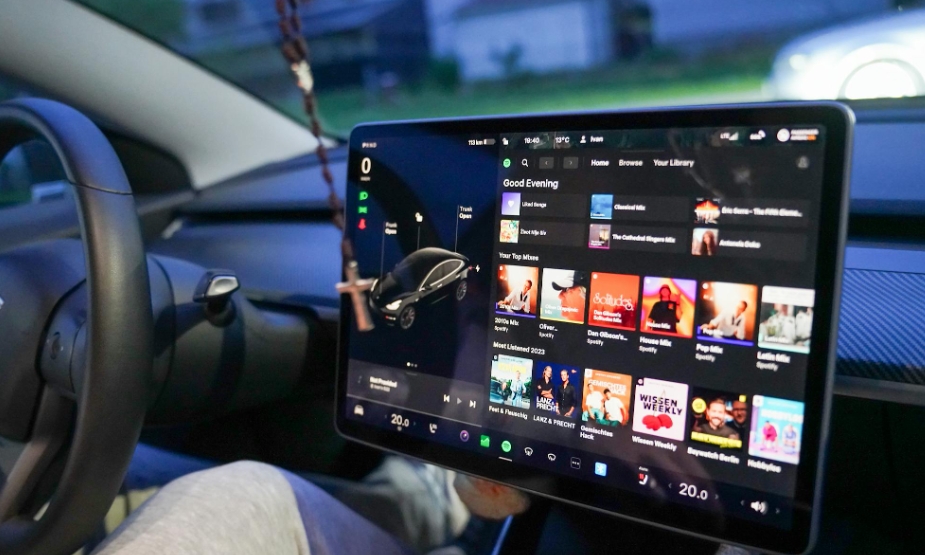
For decades, cars were defined mostly by mechanical engineering.
People compared:
- engines
- horsepower
- exhaust sound
- transmission performance
Today, however, electric vehicles are changing what drivers actually care about.
Modern EVs increasingly feel closer to smartphones on wheels than traditional cars.
That shift is transforming the automotive industry much faster than many people expected.
Software Became the Real Product
One of the strangest things about modern electric vehicles is how often they improve after purchase.
Traditional cars rarely changed significantly unless owners physically modified them.
Electric vehicles, however, regularly receive:
- software updates
- interface improvements
- battery optimizations
- new driving features
Some manufacturers even increase acceleration performance through firmware updates alone.
Ten years ago, that would have sounded ridiculous.
Today it feels normal.
Why Younger Drivers Think Differently About Cars
Consumer priorities are changing generationally.
A 2025 mobility trends report showed:
| Feature Priority | Drivers 18–35 | Drivers 50+ |
|---|---|---|
| Smart dashboard features | High | Medium |
| Engine sound | Low | High |
| Fuel efficiency | High | High |
| Software integration | Very High | Medium |
| Autonomous features | High | Low |
Younger buyers often value:
- connectivity
- navigation systems
- interface quality
- smartphone synchronization
more than traditional automotive characteristics.
This changes how companies design vehicles entirely.
Charging Anxiety Still Exists
Despite rapid EV adoption, charging infrastructure remains one of the biggest concerns.
Drivers still worry about:
- long-distance travel
- charger availability
- charging speed
- battery degradation
In many countries, infrastructure expansion still struggles to match vehicle adoption rates.
That said, battery technology continues improving steadily.
Modern charging systems are significantly faster than early EV networks, and many urban drivers now charge primarily at home instead of public stations.
Why EV Interiors Feel So Different
Many electric vehicles intentionally simplify interior design.
Physical buttons are disappearing. Large digital screens dominate dashboards. Minimalism became part of the design language itself.
Some drivers love this transition.
Others hate it completely.
The debate reflects something larger:
cars are evolving from mechanical products into digital environments.
Manufacturers are no longer competing only through engineering.
They’re competing through user experience.
The Environmental Conversation Is More Complicated Than It Looks
Electric vehicles are often discussed as purely environmental solutions, but reality is more nuanced.
Battery production still involves:
mining
industrial energy usage
global supply chain challenges
Additionally, electricity sources vary heavily between regions.
That doesn’t mean EVs lack environmental benefits. But it does mean the conversation is more complex than simple marketing slogans sometimes suggest.
The Real Transformation
The biggest impact of electric vehicles may not involve transportation at all.
It may involve changing how consumers think about technology ownership.
Cars are becoming:
updateable
connected
software-driven
subscription-integrated
In other words, the automotive industry is slowly turning into the tech industry.
And many people still haven’t fully realized it yet.